Emperor Scorpion – offspring & available animals
Current Emperor Scorpion offspring and available animals from JZ-Reptiles, clearly organised by clutch. Where parent animals are known, they are linked directly so the background of each clutch stays easy to follow.
No animals are currently available
New offspring will appear here automatically as soon as they are published.
Emperor Scorpion available - captive-bred animals from JZ-Reptiles
If you are looking for Emperor Scorpion or want to see our current offspring, you will find the available animals here organised by clutch. Where the parents are known, we show them with the clutch so the origin, line and breeding goal stay easy to follow.
Each available Emperor Scorpion is listed with the important details such as sex, morph or locality, origin, status and photos. Available and reserved animals can be enquired about directly through the contact form or WhatsApp.
For Emperor Scorpion (Pandinus imperator), we show background on origin, husbandry and breeding, our own breeding animals and, when available, current offspring.
Emperor Scorpion Pandinus imperator
Origin & natural range
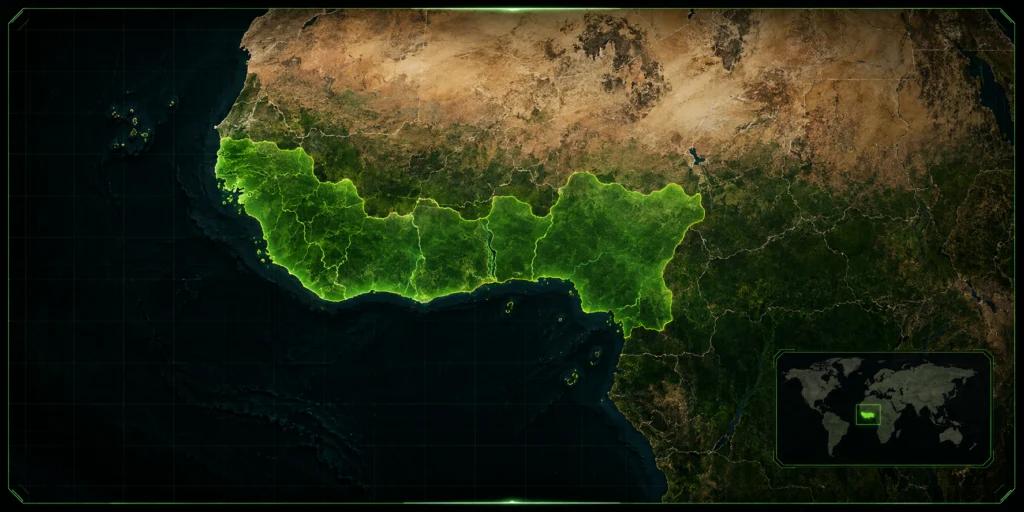
Native to humid tropical parts of West Africa. Confirmed range states include Benin, Côte d’Ivoire, Ghana, Guinea, Liberia, Nigeria and Togo. The species lives mainly in warm, humid forest and forest-edge habitats, where it shelters in burrows, under roots and beneath fallen wood.
General husbandry
Emperor scorpions need a humid, well-ventilated terrestrial enclosure with a deep, stable substrate that holds burrows. Several dark hides, leaf litter, cork or roots and constant access to clean water should be provided. The substrate should stay slightly moist in the deeper layers without becoming waterlogged.
Key parameters
General guide: around 24–27 °C through most of the enclosure during the day, with a gently warmer area of roughly 27–29 °C. A moderate drop at night is suitable. Relative humidity is commonly kept around 70–85 %, combined with good ventilation and a moisture gradient in the substrate.
Space & enclosure
Floor area and substrate depth matter more than height. For an adult animal, use a secure terrestrial enclosure with enough room for several hides and at least roughly 15–20 cm of burrow-friendly substrate; larger enclosures and deeper substrate offer more behavioural choice. Group housing can work in suitable setups but always carries a risk of stress or cannibalism and requires close observation.
Diet
In the wild: Mainly insects and other invertebrates; larger animals may occasionally take small vertebrate prey.
In human care: A varied selection of appropriately sized feeder insects such as crickets, roaches and locusts. Match quantity and interval to age, size and body condition, and remove uneaten prey promptly.
Conservation & CITES
Conservation status: CITES Appendix II (Pandinus imperator). International trade and cross-border transfers are subject to the relevant CITES documentation and proof-of-origin requirements.
Special notes & safety
VENOMOUS. The species is generally regarded as having relatively mild venom compared with medically important scorpions, but a sting can still be painful and individual or allergic reactions are possible. Handling should be avoided; use secure tools and a calm working routine when servicing the enclosure.
The husbandry information and space recommendations on this page are general guidance. Legal minimum requirements vary between countries and regions and must always be checked locally. Before buying any animal, please take the time to learn about the species in depth – you are welcome to ask us, and we also recommend good specialist literature. Husbandry should always be adapted to the species, locality, age, size and individual animal.
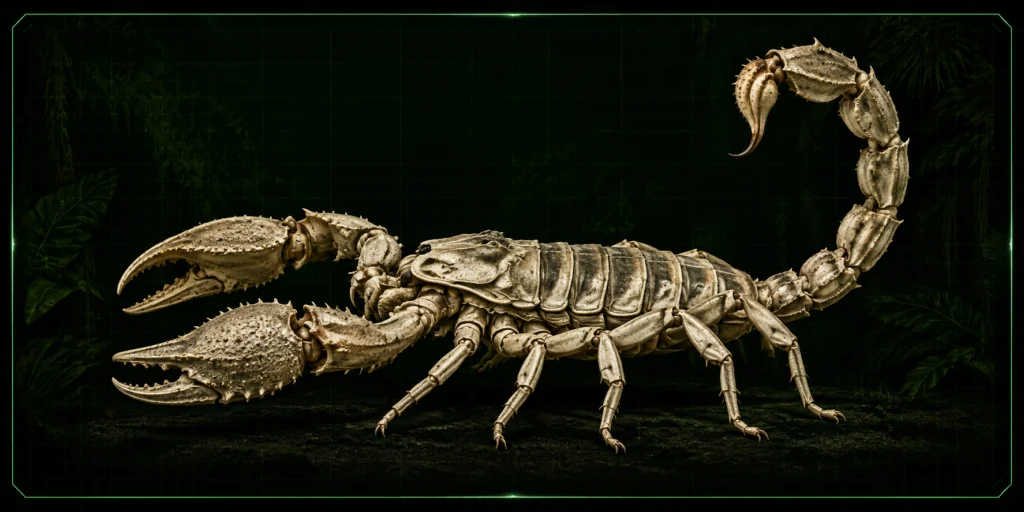
Skeleton of Emperor Scorpion
Natural range
Häufige Fragen zu Kaiserskorpion
Woher stammt Kaiserskorpion?
Der Kaiserskorpion stammt aus dem tropischen Westafrika. Als gesicherte Verbreitungsstaaten gelten Benin, Côte d’Ivoire, Ghana, Guinea, Liberia, Nigeria und Togo. Er bewohnt vor allem warme, feuchte Wald- und Waldrandbereiche und nutzt selbst gegrabene Röhren sowie Verstecke unter Wurzeln, Laub und Totholz.
Was ist bei der Haltung von Kaiserskorpion wichtig?
Pandinus imperator benötigt ein feucht-warmes, zugleich gut belüftetes Bodenterrarium mit tiefem, standfestem und grabfähigem Substrat. Mehrere dunkle Verstecke, Laub, Kork oder Wurzelstücke sowie ständig verfügbares sauberes Wasser gehören zur Grundausstattung. Die tieferen Substratschichten sollten leicht feucht bleiben, ohne dass Staunässe entsteht.
Wie tief sollte das Substrat für einen Kaiserskorpion sein?
Kaiserskorpione graben und nutzen geschützte Bodenbereiche. Deshalb sollte ein ausreichend tiefer, stabiler und dauerhaft grabfähiger Substratbereich zur Verfügung stehen.
Welche Feuchtigkeit braucht ein Kaiserskorpion?
Die Art stammt aus feuchteren tropischen Lebensräumen. Sinnvoll ist ein geeigneter Feuchteverlauf im Substrat bei gleichzeitig funktionierender Belüftung; dauerhaft völlig ausgetrockneter oder vernässter Bodengrund ist zu vermeiden.
Braucht ein Kaiserskorpion Verstecke?
Ja. Mehrere sichere Rückzugsplätze und grabfähige Bereiche geben dem Tier Wahlmöglichkeiten und reduzieren unnötige Störungen.
Was frisst ein Kaiserskorpion?
Kaiserskorpione ernähren sich räuberisch von geeigneten Futtertieren. Größe und Fütterungsintervall sollten an Alter, Größe und Körperzustand angepasst werden.
Was ist bei der Zucht von Kaiserskorpionen wichtig?
Für die Zucht sind stabile Haltungsbedingungen, geeignete Rückzugs- und Grabmöglichkeiten sowie eine genaue Beobachtung der Tiere wichtig. Paar- oder Gruppenhaltung sollte nur mit ausreichender Struktur und Kontrolle erfolgen.
Wo finde ich die Stammtiere von JZ-Reptiles zu dieser Art?
Unsere dokumentierten Stammtiere und die zugehörigen Artinformationen findest du auf der Stammtiere-Seite zu Kaiserskorpion (Pandinus imperator). Stammtiere ansehen.
Gibt es aktuell Nachzuchten oder Abgabetiere von Kaiserskorpion?
Den aktuellen Bestand zeigen wir auf der Abgabetier-Seite. Die Verfügbarkeit kann sich je nach Zuchtsaison und Entwicklung der einzelnen Tiere ändern. Aktuelle Abgabetiere prüfen.
Passende Seiten bei JZ-Reptiles: Artportrait & Stammtiere · FAQ