
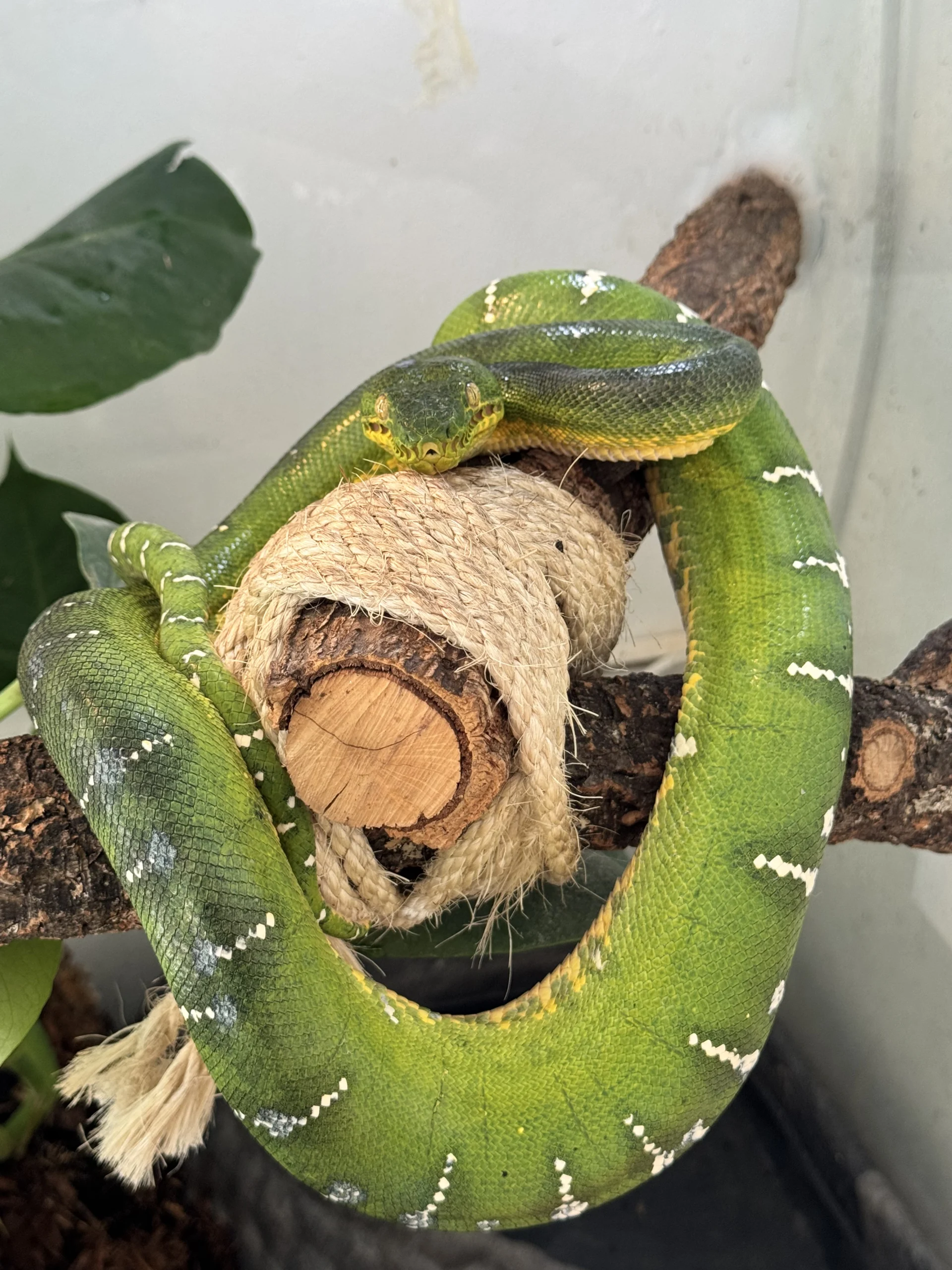
Breeding animal
An arboreal boa from the humid lowland rainforests of northern South America.
Here we introduce our Emerald Tree Boa breeding group (Corallus caninus). Alongside the individual breeding animals, you will find practical information about natural range, general husbandry, morphs or localities, genetics and our long-term breeding plans.
At JZ-Reptiles, we put a lot of value on well-documented reptile keeping and responsible breeding here in Austria. With Emerald Tree Boa, our focus is on traceable origins, healthy breeding animals and clear information about our lines.
Native to humid lowland rainforest in northern South America, especially the Amazon and Guiana regions.
Emerald tree boas are arboreal and need a well-ventilated enclosure with several sturdy horizontal perches, calm resting areas and reliable access to clean drinking water. Humidity should be high enough for the species but the enclosure should not stay wet all the time.
General guide: around 26–29 °C during the day with a cooler night period. Keep humidity fairly high while still allowing good airflow and regular drying. Offer horizontal perches at different heights and fresh water.
A tall, well-ventilated enclosure with enough width and depth for several solid perches and a real temperature and humidity gradient. Height alone is not a substitute for usable space.
In the wild: Mainly small mammals and birds.
In human care: Mostly appropriately sized mice or rats; feed conservatively and according to body condition.
Conservation status: boas in this group are listed under CITES Appendix II. Cross-border transfers may require the relevant documentation and permits.
Not venomous, but the long teeth can cause painful bites. Calm, low-stress handling and a sensible working routine are important.
The husbandry information and space recommendations on this page are general guidance. Legal minimum requirements vary between countries and regions and must always be checked locally. Before buying any animal, please take the time to learn about the species in depth – you are welcome to ask us, and we also recommend good specialist literature. Husbandry should always be adapted to the species, locality, age, size and individual animal.
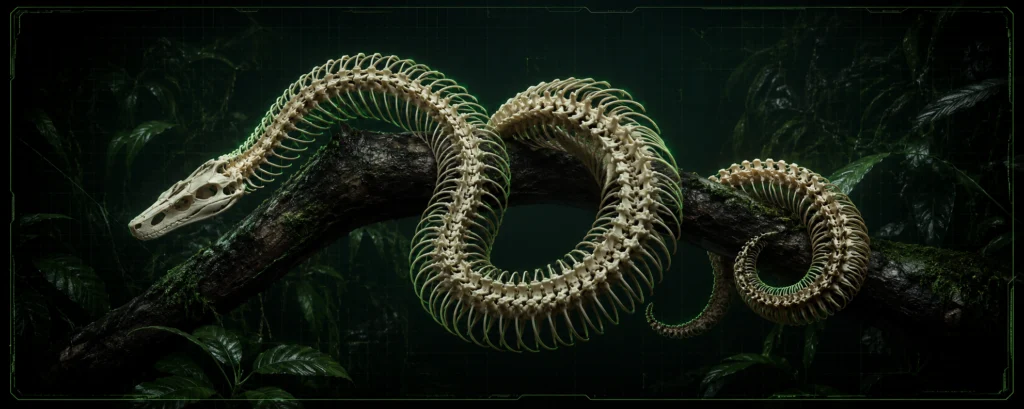
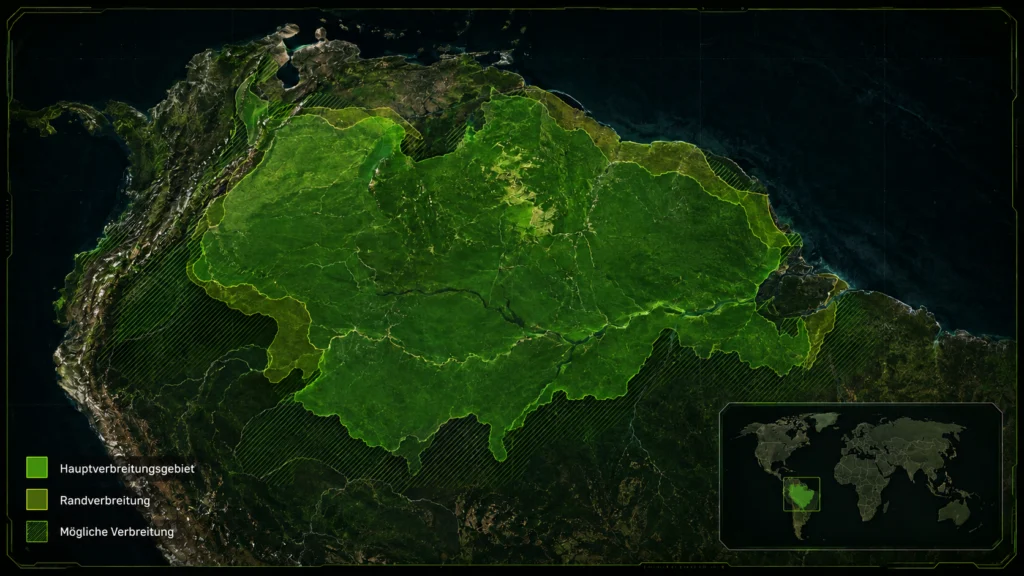
The species inhabits Amazonian and Guianan rainforest regions of northern South America.
Emerald tree boas need a quiet, vertically structured enclosure with securely sized horizontal perches, good air movement and an appropriate day-night and humidity cycle. Persistent waterlogging and stagnant air should be avoided.
As an arboreal species it needs a quiet, vertically structured enclosure with securely sized horizontal perches and sheltered resting areas.
Stable horizontal perches provide key resting and activity sites. Different positions also allow the animal to use different climate zones.
An appropriate humidity cycle and good air movement belong together. Persistent waterlogging and stagnant, stale air should be avoided.
Yes. Its arboreal lifestyle should be reflected in usable height and several secure climbing and resting routes.
Perches and other load-bearing elements must be securely fixed and appropriately sized. The layout should provide calm resting places while still allowing routine care and inspection.
You can find our breeding animals and species information on the breeding animals page for Emerald tree boa (Corallus caninus). See our breeding animals.
You can see what is currently available on our animals-for-sale page. Availability changes throughout the breeding season and as individual animals develop. See what is available.
More from JZ-Reptiles: Animals currently available · FAQ