
Panther Chameleon – offspring & available animals
Current Panther Chameleon offspring and available animals from JZ-Reptiles, clearly organised by clutch. Where parent animals are known, they are linked directly so the background of each clutch stays easy to follow.
No animals are currently available
New offspring will appear here automatically as soon as they are published.
Panther Chameleon available - captive-bred animals from JZ-Reptiles
If you are looking for Panther Chameleon or want to see our current offspring, you will find the available animals here organised by clutch. Where the parents are known, we show them with the clutch so the origin, line and breeding goal stay easy to follow.
Each available Panther Chameleon is listed with the important details such as sex, morph or locality, origin, status and photos. Available and reserved animals can be enquired about directly through the contact form or WhatsApp.
For Panther Chameleon (Furcifer pardalis), we show background on origin, husbandry and breeding, our own breeding animals and, when available, current offspring.
Panther Chameleon Furcifer pardalis
Origin & natural range
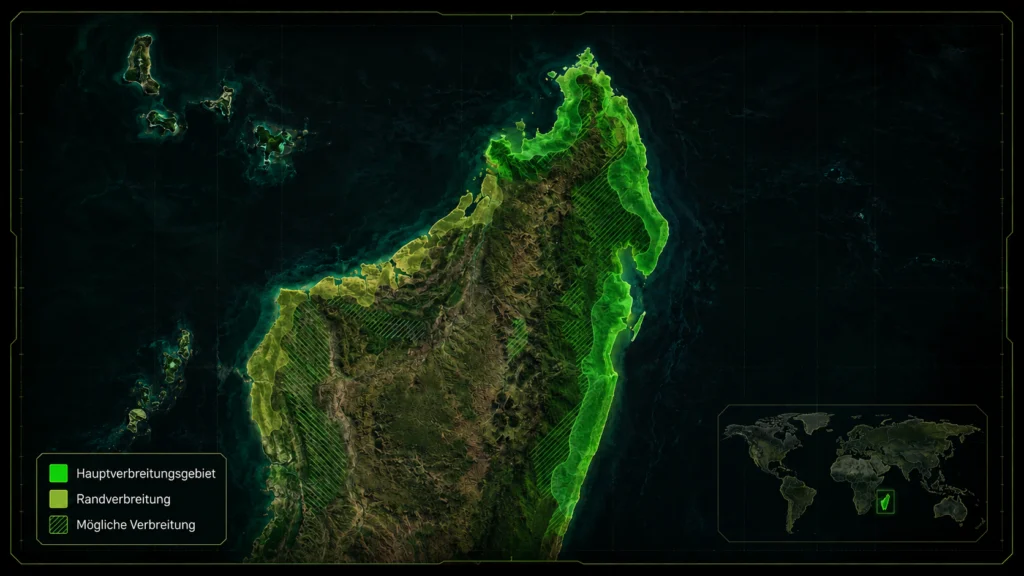
Native to Madagascar, especially the north and areas along the eastern and north-western coasts. Different localities are known for distinct colour patterns.
General husbandry
Panther chameleons are usually kept individually in tall, very well-ventilated and densely planted enclosures. Good UVB, a suitable basking area, plenty of visual cover and climbing routes, regular access to drinking water and a natural day/night climate cycle are all important.
Key parameters
General guide: a well-ventilated daytime setup with a clear temperature gradient, local basking area, quality UVB and a noticeable night-time cool-down. Use humidity cycles with proper drying phases and provide regular drinking opportunities.
Space & enclosure
A tall, very well-ventilated individual enclosure with enough width and depth for visual barriers, several climbing routes and real temperature zones. Larger and more heavily planted setups are usually better for adults.
Diet
In the wild: Mainly insects and other small invertebrates.
In human care: A varied selection of suitable, well-fed feeder insects with appropriate mineral supplementation; adjust quantity to age and condition.
Conservation & CITES
Conservation status: CITES Appendix II (Furcifer pardalis). International transfers are subject to the relevant proof-of-origin and CITES paperwork.
Special notes & safety
Not venomous. Handling should be kept to a minimum; stress, poor UV provision and unsuitable climate are much bigger concerns than direct contact.
The husbandry information and space recommendations on this page are general guidance. Legal minimum requirements vary between countries and regions and must always be checked locally. Before buying any animal, please take the time to learn about the species in depth – you are welcome to ask us, and we also recommend good specialist literature. Husbandry should always be adapted to the species, locality, age, size and individual animal.
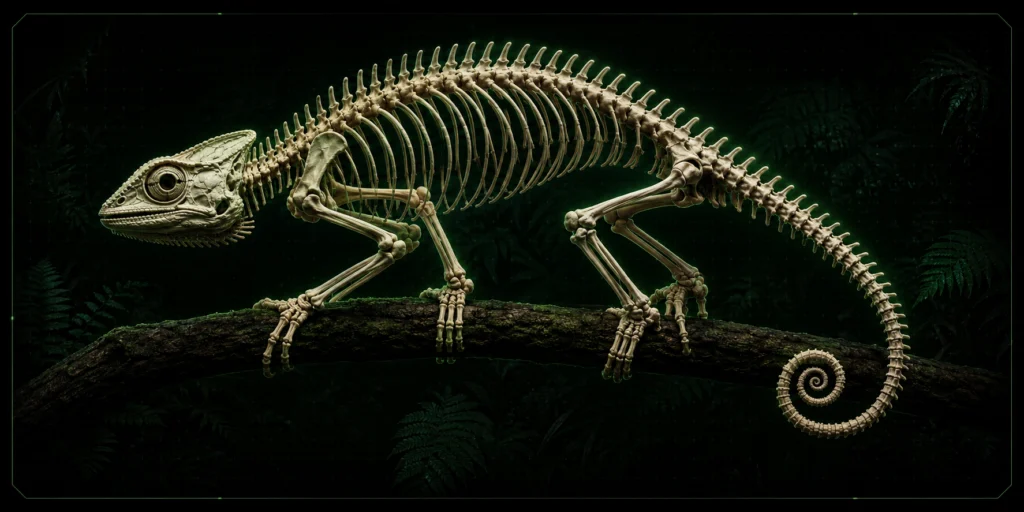
Skeleton of Panther Chameleon
Natural range
Frequently asked questions about the Panther chameleon
Where does the Panther chameleon come from?
Panther chameleons originate from Madagascar and are especially widespread in the north and along the eastern and north-western coastal regions.
What is important when keeping a Panther chameleon?
They are kept individually in tall, well-ventilated and densely planted enclosures. Suitable UV and heat zones, many visual barriers and climbing routes, reliable drinking water and an appropriate daily climate cycle are essential.
How should a panther chameleon enclosure be set up?
A tall, very well-ventilated and densely planted enclosure with many climbing routes, visual barriers and different activity zones is appropriate.
Why are UV light and a basking area important?
Suitable UV provision and heat zones are central husbandry factors, while the animal must also be able to reach cooler and sheltered areas.
How does a panther chameleon get drinking water?
A reliable drinking-water supply is important and should suit the animal’s natural drinking behaviour. Water and humidity management need to be combined with good ventilation.
Are panther chameleons kept together?
They are generally kept individually. Visual barriers and a calm, structured environment help reduce unnecessary stress.
What does locality mean in panther chameleons?
Panther chameleons occur in geographically influenced localities with characteristic colour and pattern tendencies. Traceable origin documentation is particularly valuable in breeding.
Where can I see JZ-Reptiles’ breeding animals of this species?
You can find our breeding animals and species information on the breeding animals page for Panther chameleon (Furcifer pardalis). See our breeding animals.
Do you currently have captive-bred Panther chameleon available?
You can see what is currently available on our animals-for-sale page. Availability changes throughout the breeding season and as individual animals develop. See what is available.
More from JZ-Reptiles: Species profile & our breeding animals · FAQ