Indian Python – offspring & available animals
Current Indian Python offspring and available animals from JZ-Reptiles, clearly organised by clutch. Where parent animals are known, they are linked directly so the background of each clutch stays easy to follow.
No animals are currently available
New offspring will appear here automatically as soon as they are published.
Indian Python available - captive-bred animals from JZ-Reptiles
If you are looking for Indian Python or want to see our current offspring, you will find the available animals here organised by clutch. Where the parents are known, we show them with the clutch so the origin, line and breeding goal stay easy to follow.
Each available Indian Python is listed with the important details such as sex, morph or locality, origin, status and photos. Available and reserved animals can be enquired about directly through the contact form or WhatsApp.
For Indian Python (Python molurus), we show background on origin, husbandry and breeding, our own breeding animals and, when available, current offspring.
Indian Python Python molurus
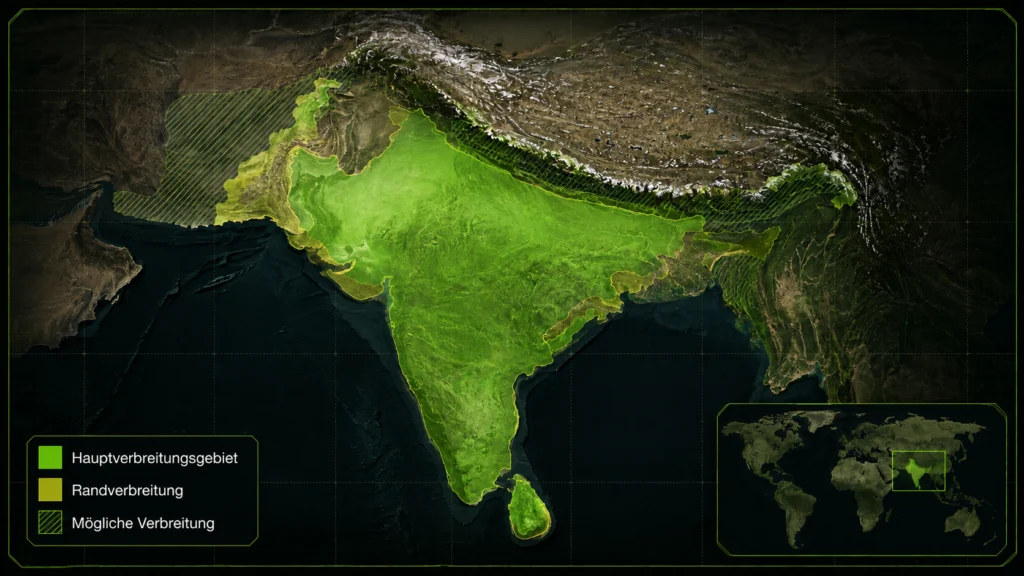
Origin & natural range
Found across parts of the Indian subcontinent, including India, Pakistan, Nepal, Bhutan and Sri Lanka, with populations often associated with woodland, scrub, marshes and areas near water.
General husbandry
Indian pythons need a large, secure enclosure with a reliable warm-to-cool gradient, sturdy hides, a large water area and enough usable floor space for a heavy-bodied snake. Good ventilation and sensible humidity are important, especially around shedding.
Key parameters
General guide: around 27–30 °C in the warmer daytime area with a local hot spot of about 31–33 °C, followed by a moderate night-time drop. Keep humidity at a sensible middle level and offer a humid retreat during shedding.
Space & enclosure
Adults need a very large, escape-proof enclosure that genuinely allows stretching out, turning, retreating and choosing between different temperature zones. For large adults, a room-style enclosure is often the better option.
Diet
In the wild: Mainly mammals and birds, with other vertebrate prey taken regionally.
In human care: Appropriately sized whole prey, mainly rats and rabbits for large specimens; adjust quantity and interval to age and body condition.
Conservation & CITES
Strictly protected: CITES Appendix I (Python molurus). International trade is much more tightly regulated than for Appendix II species, so the required documents and permits must be checked before any cross-border transfer.
Special notes & safety
A very large constrictor. Because of its potential size and strength, secure locks, a sensible safety plan and experienced handling are essential.
The husbandry information and space recommendations on this page are general guidance. Legal minimum requirements vary between countries and regions and must always be checked locally. Before buying any animal, please take the time to learn about the species in depth – you are welcome to ask us, and we also recommend good specialist literature. Husbandry should always be adapted to the species, locality, age, size and individual animal.
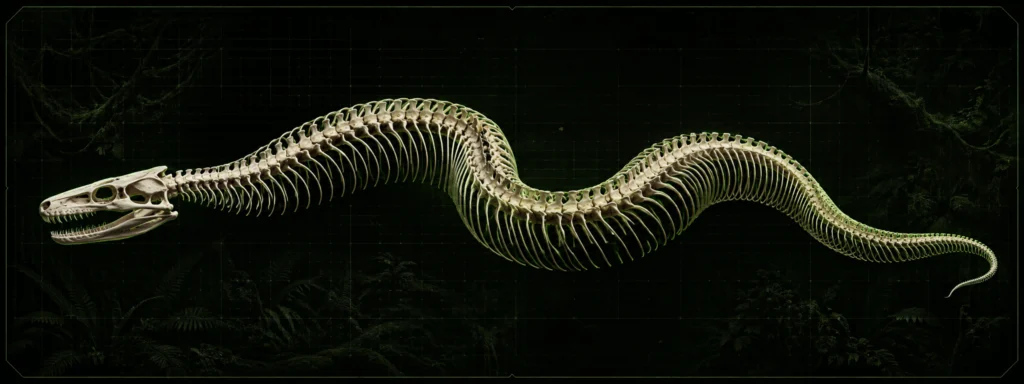
Skeleton of Indian Python
Natural range
Frequently asked questions about the Indian python
Where does the Indian python come from?
The species occurs mainly in India, Pakistan, Nepal and Sri Lanka and in adjoining regions of the Indian subcontinent.
What is important when keeping an Indian python?
Indian pythons need extensive space, load-bearing resting areas, secure retreats, usable water and clearly separated thermal zones. The enclosure and its security must be designed for the animal’s adult weight, strength and size.
How should an enclosure for an Indian python be planned?
It should provide extensive usable space, load-bearing resting areas, secure retreats, usable water and clearly separated thermal zones. Construction and security must be designed for the animal’s adult weight, strength and size.
Why are robust resting areas important for Indian pythons?
Large pythons can become very heavy. Resting structures and furnishings therefore need to be securely fixed, load-bearing and positioned so the animal can use them comfortably.
Does an Indian python need different climate zones?
Yes. Different temperature zones and suitable retreats allow the animal to select conditions that match its current needs.
What role does water play in Indian python husbandry?
Clean, usable water is part of the basic setup. It should be positioned so that cleaning and regular water changes can be carried out reliably.
What should be considered with adult Indian pythons?
Adult size, strength and long-term space requirements need to be considered before acquisition. Secure locks and well-planned working routines are especially important with large animals.
Where can I see JZ-Reptiles’ breeding animals of this species?
You can find our breeding animals and species information on the breeding animals page for Indian python (Python molurus). See our breeding animals.
Do you currently have captive-bred Indian python available?
You can see what is currently available on our animals-for-sale page. Availability changes throughout the breeding season and as individual animals develop. See what is available.
More from JZ-Reptiles: Species profile & our breeding animals · FAQ