
Cranwell's Horned Frog – offspring & available animals
Current Cranwell's Horned Frog offspring and available animals from JZ-Reptiles, clearly organised by clutch. Where parent animals are known, they are linked directly so the background of each clutch stays easy to follow.
No animals are currently available
New offspring will appear here automatically as soon as they are published.
Cranwell's Horned Frog available - captive-bred animals from JZ-Reptiles
If you are looking for Cranwell's Horned Frog or want to see our current offspring, you will find the available animals here organised by clutch. Where the parents are known, we show them with the clutch so the origin, line and breeding goal stay easy to follow.
Each available Cranwell's Horned Frog is listed with the important details such as sex, morph or locality, origin, status and photos. Available and reserved animals can be enquired about directly through the contact form or WhatsApp.
For Cranwell's Horned Frog (Ceratophrys cranwelli), we show background on origin, husbandry and breeding, our own breeding animals and, when available, current offspring.
Cranwell's Horned Frog Ceratophrys cranwelli
Origin & natural range
Native to the drier Gran Chaco region of South America, including parts of Argentina, Paraguay, Bolivia and Brazil.
General husbandry
Cranwell’s horned frogs are ground-dwelling ambush predators. They need a warm, humid but not waterlogged substrate, enough depth to burrow and a shallow source of clean water.
Key parameters
General guide: a warm ground-level area in the mid-20s °C, moist but not soaked substrate and clean shallow water. The substrate should be deep enough for normal burrowing behaviour.
Space & enclosure
A broad floor area with enough substrate depth, shelter and a useful temperature and humidity gradient matters more than height. The frog should be able to turn freely and bury itself completely.
Diet
In the wild: Insects and other invertebrates, plus small vertebrates they can overpower.
In human care: A varied diet of suitable feeder insects and worms; larger prey only sensibly and sparingly. Pay attention to mineral balance.
Conservation & CITES
Ceratophrys cranwelli is not generally listed in the CITES Appendices at present. National husbandry and import rules may still apply.
Special notes & safety
Not venomous, but they have a powerful bite. Keep direct skin contact to a minimum; amphibians are sensitive to residues from soap, disinfectant and other chemicals.
The husbandry information and space recommendations on this page are general guidance. Legal minimum requirements vary between countries and regions and must always be checked locally. Before buying any animal, please take the time to learn about the species in depth – you are welcome to ask us, and we also recommend good specialist literature. Husbandry should always be adapted to the species, locality, age, size and individual animal.
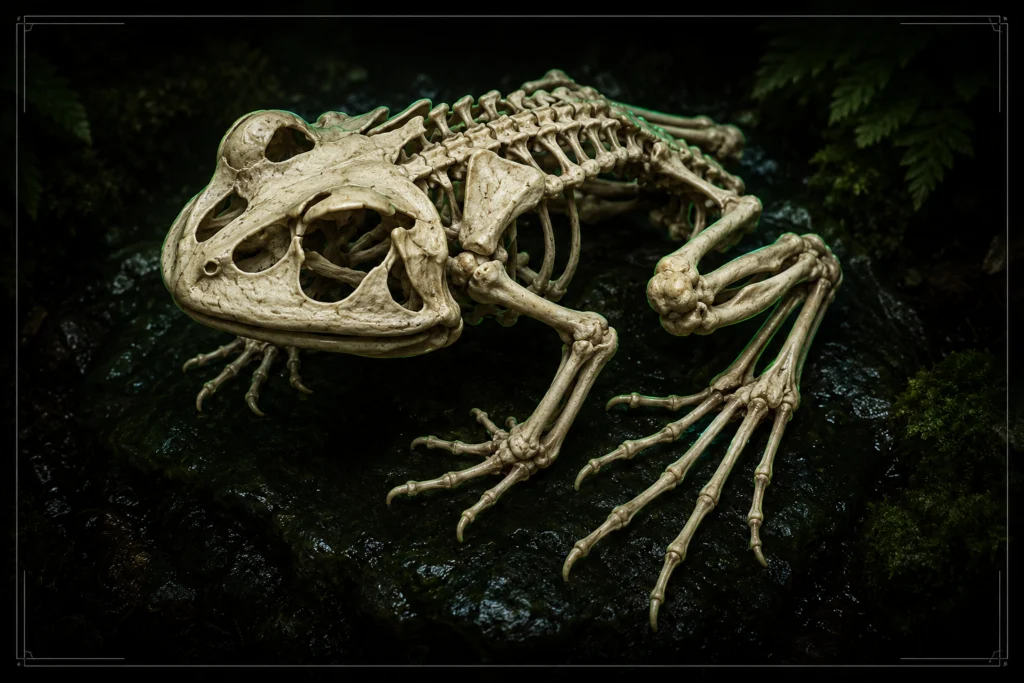
Skeleton of Cranwell's Horned Frog
Natural range

Frequently asked questions about the Cranwell's horned frog
Where does the Cranwell's horned frog come from?
The species originates from seasonal habitats in the Gran Chaco region of South America.
What is important when keeping a Cranwell's horned frog?
Cranwell’s horned frogs need a ground-oriented enclosure with suitable burrowable substrate, secure retreats, a controlled moisture gradient and clean water. The substrate should support natural burying behaviour without remaining waterlogged.
Why does a Cranwell’s horned frog need burrowable substrate?
Horned frogs spend much of their time on or within the substrate. Suitable burrowable substrate supports this natural behaviour.
How humid should the enclosure be?
A controlled moisture gradient is preferable to permanently waterlogged conditions. The substrate should provide suitable moisture without remaining swampy.
Does a horned frog need hides?
Sheltered retreats complement the burrowable substrate and provide additional choices for the animal.
What is important about the water supply?
Clean water should be safely accessible and renewed regularly. The container and surrounding area should be easy to clean.
What should be considered when feeding a horned frog?
Prey size and feeding amount should suit the frog’s size and body condition. Varied, controlled feeding is preferable to a constant excess of food.
Where can I see JZ-Reptiles’ breeding animals of this species?
You can find our breeding animals and species information on the breeding animals page for Cranwell's horned frog (Ceratophrys cranwelli). See our breeding animals.
Do you currently have captive-bred Cranwell's horned frog available?
You can see what is currently available on our animals-for-sale page. Availability changes throughout the breeding season and as individual animals develop. See what is available.
More from JZ-Reptiles: Species profile & our breeding animals · FAQ